
Whether you’re a beginner or a seasoned golfer, one fundamental aspect of your game that can’t be overlooked is how you grip the golf club. Your grip directly impacts your swing plane, clubface control, and overall shot consistency. Mastering the right grip can help you hit more fairways, find more greens, and develop a powerful, repeatable swing.
In this guide, we’ll break down the three primary golf grips and discuss which might be best suited for your skill level and hand size.
1. The Ten-Finger Grip
The ten-finger grip, also known as the baseball grip, is often recommended for beginners due to its simplicity and ease of adoption. However, many elite players, including Scott Piercy, Michael Thorbjornsen, and Moe Norman, have successfully used this grip.
Benefits of the Ten-Finger Grip
• Ideal for beginners – Simple to learn and easy to maintain.
• Enhances feel and control – Especially useful for players who struggle with grip pressure.
• Great for small hands – Allows golfers with smaller hands to wrap their fingers comfortably around the grip.
Potential Drawbacks
• Not ideal for larger hands – Golfers with medium-large (ML) glove sizes or bigger may feel cramped or uncomfortable using this grip.
• May reduce control for stronger players – Because both hands remain separate, some players might find it harder to keep the clubface stable at impact.
To assume a ten-finger grip, place both hands on the club with all ten fingers in direct contact with the grip. This promotes a natural wrist hinge and helps with clubface control. (See reference images below for a visual guide.)

2. Interlocking vs. Overlapping Grip
As golfers progress, they often transition to one of the two most popular grips used by professionals: the interlocking grip or the overlapping grip.
Interlocking Grip
The interlocking grip involves intertwining the right pinky finger with the left index finger, effectively “locking” the hands together. This grip is widely used by players such as Tiger Woods, Jack Nicklaus, and Rory McIlroy.

Advantages of the Interlocking Grip
• Increased control – Helps unify both hands, preventing excessive wrist movement.
• Potential for more clubhead speed – Some players experience added distance due to better connection between hands and club.
• Great for small-to-medium hands – Helps golfers with smaller hands create a solid grip without excessive finger overlap.
Who Should Avoid It?
• Players struggling with clubface release – If you tend to push the ball right, try the overlapping grip first.
• Golfers with larger hands – Might feel restrictive compared to the overlapping grip.
Overlapping Grip (Vardon Grip)
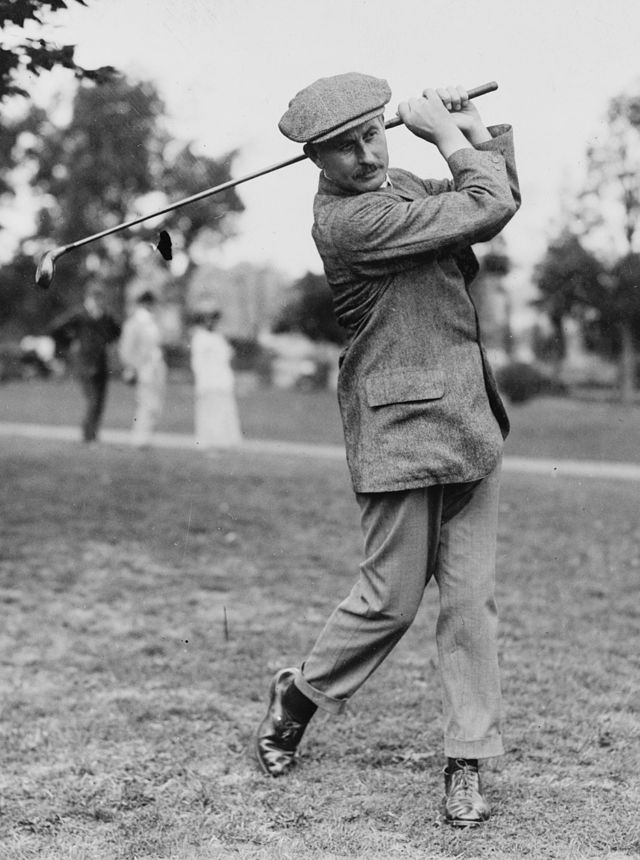
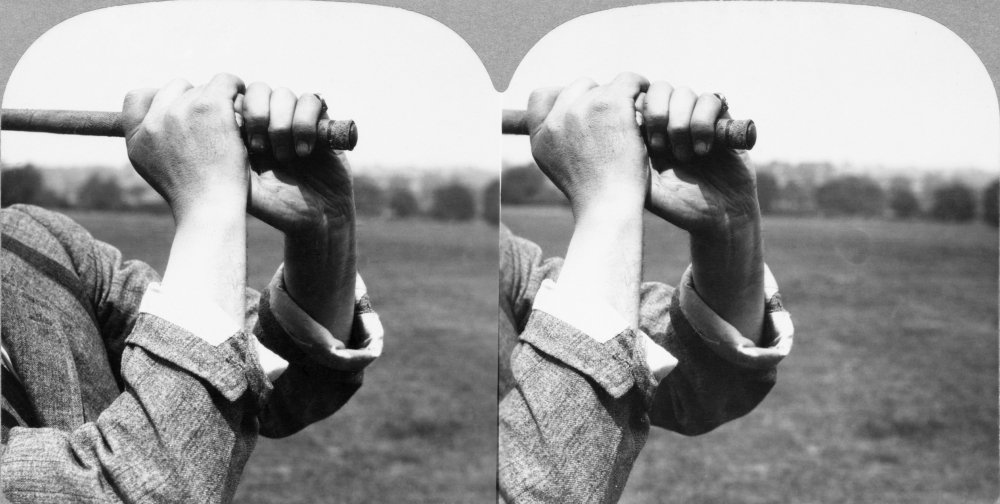
The overlapping grip, also known as the Vardon grip, involves resting the right pinky finger over the left index finger. This is one of the most common grips among professional golfers.
Why Use the Overlapping Grip?
• Preferred by players with larger hands – The overlap allows a more relaxed grip, reducing tension in the fingers.
• Helps reduce excessive wrist action – Ideal for golfers who tend to overuse their hands in the swing.
Key Differences Between Interlocking & Overlapping Grips
| Grip Type | Best For | Not Ideal For | Key Benefit |
| Interlocking | Small to medium hands | Large hands, players struggling with a closed clubface | Increased control, potential for extra speed |
| Overlapping | Medium to large hands | Players with weaker grip strength | Promotes a relaxed hold with less tension |
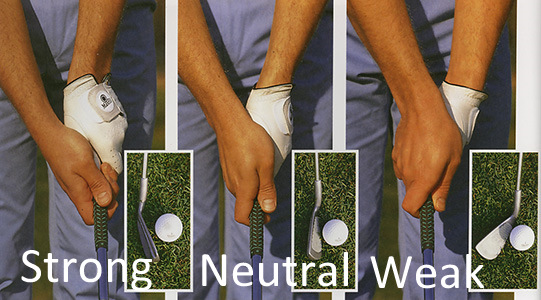
3. Grip Strength: Strong vs. Neutral vs. Weak
Once you’ve chosen your grip style, it’s essential to focus on grip strength—how your hands are positioned relative to the clubface.
Neutral Grip (Recommended for Most Golfers)
A neutral grip is ideal for consistent ball-striking and shot control. To achieve this:
1. Position your left thumb down the shaft when gripping the club.
2. When placing your right hand, ensure two knuckles of your left hand are visible.
Strong Grip
• Best for golfers who struggle with slicing (helps square the clubface).
• Can lead to hooks or pulls if too exaggerated.
Weak Grip
• Favored by some players for controlled fades.
• Can cause slices and weak ball flights if the clubface remains too open at impact.
4. Finding the Right Grip Pressure
Even with the perfect grip style, improper grip pressure can ruin your swing.
Key Tip: Imagine your grip pressure on a scale from 1 to 10 (1 = club falling out of your hands, 10 = squeezing the club as hard as possible).
✅ Ideal grip pressure = 4/10 – Firm enough to maintain control but relaxed enough to allow wrist hinge and natural release.
A grip that is too tight restricts movement and can lead to tension in the arms and shoulders, while a too-loose grip can cause instability at impact.
Conclusion: Choose the Best Grip for Your Game
Finding the right grip for your game depends on your experience level, hand size, and swing style.
• Beginners & Small Hands → Try the Ten-Finger Grip for maximum comfort.
• Intermediate Players → The Interlocking Grip offers extra control and consistency.
• Players with Larger Hands → The Overlapping Grip provides a relaxed, professional feel.
No matter which grip you choose, maintaining a neutral grip position and applying optimal grip pressure (4/10) will help you develop a more consistent, powerful golf swing.
Final Thought
Your golf grip is your only connection to the club—getting it right can transform your swing, ball-striking, and overall performance on the course. Take the time to experiment with different grips and find what works best for your game!
 The Golfer's Arc
Leave a comment