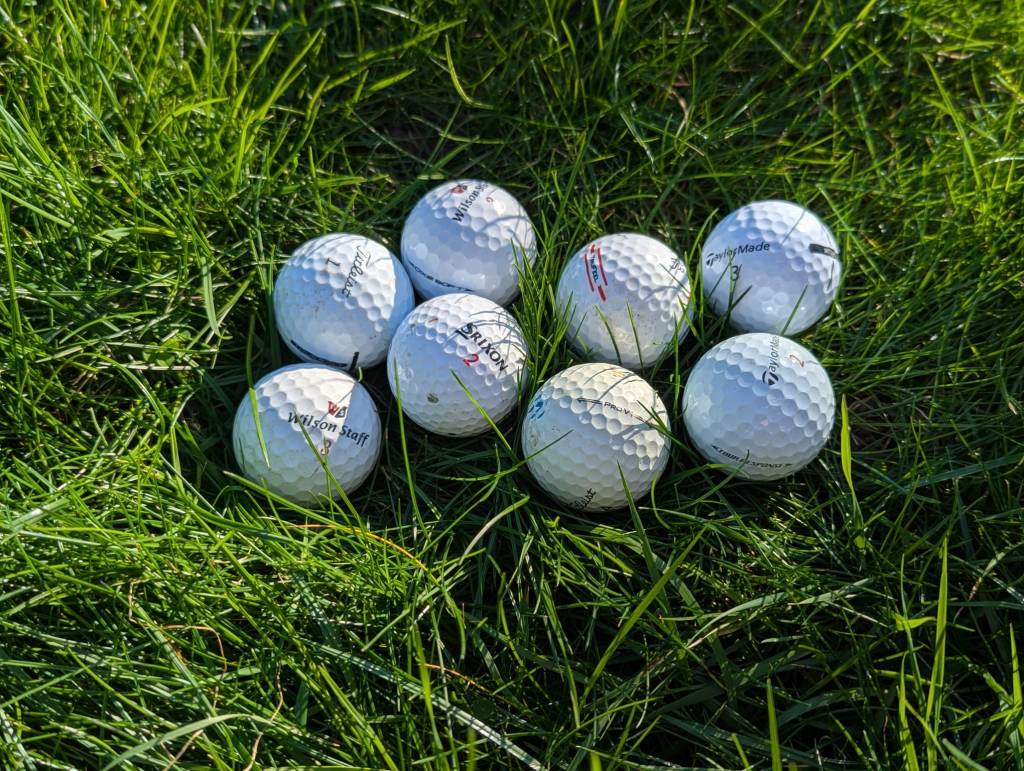
Struggling to find the perfect golf ball? Discover the differences between two-piece, three-piece, and tour golf balls and how they impact your performance.
Why Your Golf Ball Choice Matters
Many golfers focus on equipment upgrades and lessons to improve their game, but one critical factor is often overlooked—the golf ball. The type of ball you play can affect your distance, spin, control, and overall performance on the course.
In this guide, we’ll break down the different types of golf balls and help you find the best one based on your clubhead speed, skill level, and playing conditions.
Types of Golf Balls & Their Impact on Your Game
- Two-Piece Golf Balls: Best for Distance & Durability
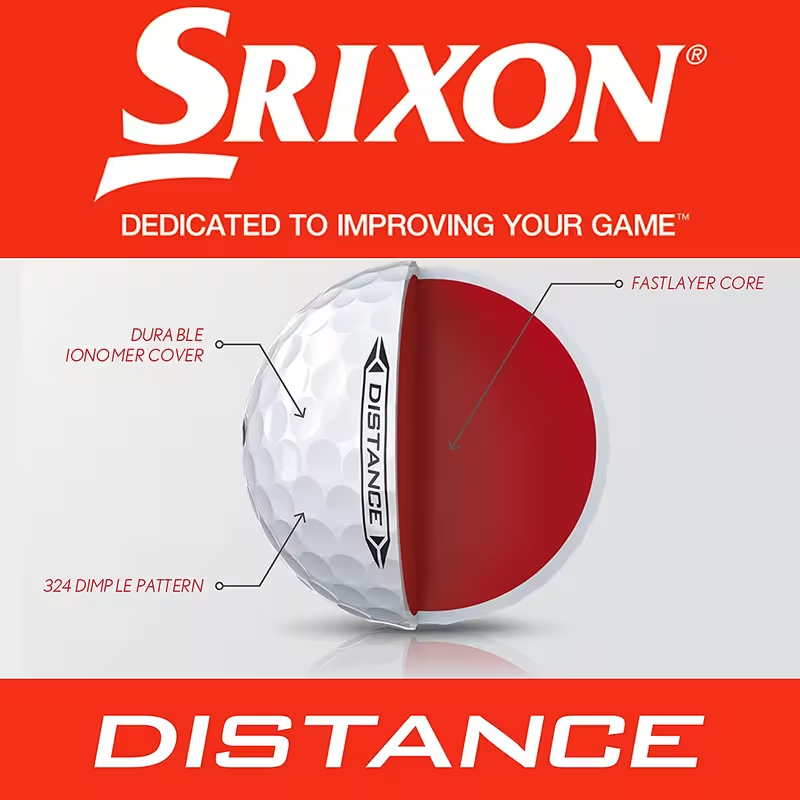
Two-piece golf balls have a single inner core and an outer cover, typically made of ionomer or Surlyn. These balls are designed for distance and durability, but their feel varies based on compression.
Distance Two-Piece Golf Balls
• Inner Core: Harder, high-compression
• Best For: Golfers with 100mph+ clubhead speed
Pros:
✅ Maximum distance, even in winter conditions
✅ Affordable compared to multi-layered balls
Cons:
❌ Harder to compress for slower swing speeds
❌ Less spin and control around the greens
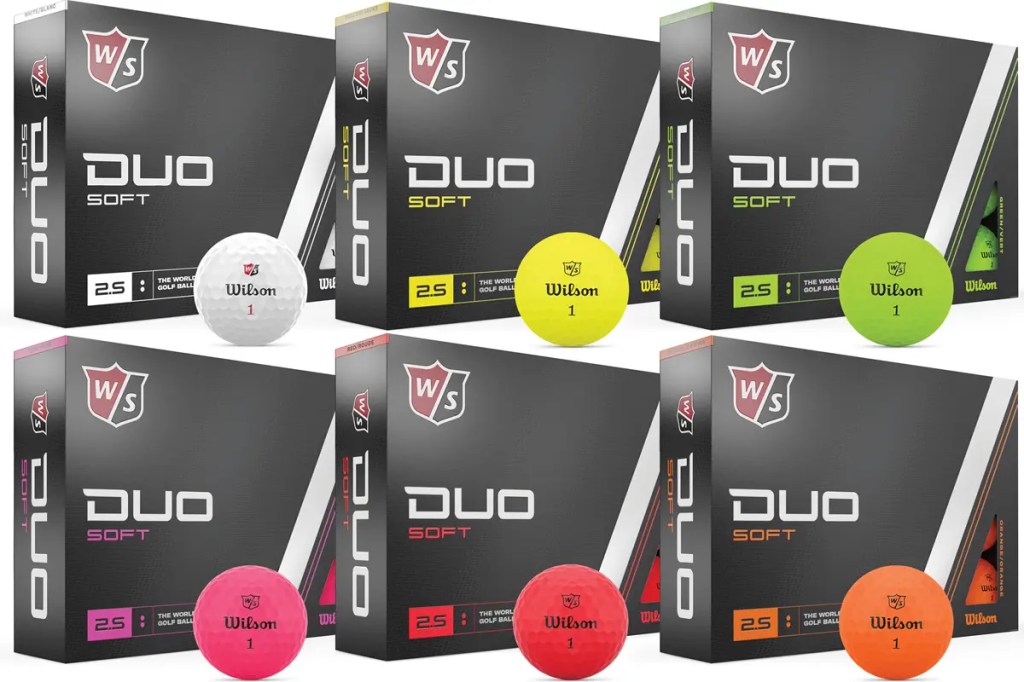
Soft Two-Piece Golf Balls
• Inner Core: Softer, low-compression
• Best For: Golfers with moderate swing speeds (below 85mph)
Pros:
✅ Easier compression for better feel and control
✅ More spin around the greens than hard-distance balls
Cons:
❌ Not suitable for fast swingers as they create too much spin
❌ Can lose accuracy due to excessive backspin
- Three-Piece Golf Balls: Balanced Performance for Mid-Handicappers
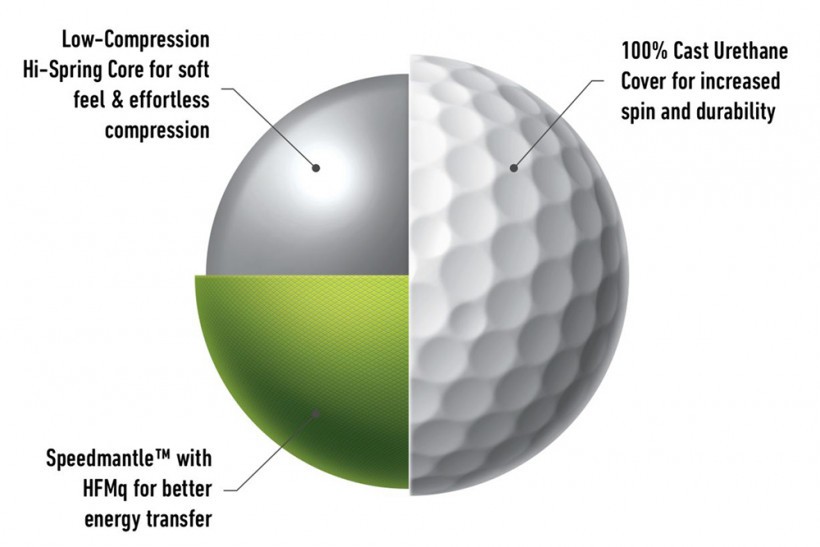
Three-piece golf balls introduce a middle layer, which improves energy transfer for increased distance, spin, and feel.
• Outer Cover: Urethane for better greenside control
• Best For: Golfers with 86-99mph swing speed (mid-handicappers to pros)
Pros:
✅ Better spin control than two-piece balls
✅ Enhanced feel around the greens
Cons:
❌ Slightly more expensive than two-piece balls
❌ Requires moderate swing speed for full benefits
- Four & Five-Piece Golf Balls: Maximum Spin & Shot Shaping
These tour-level balls have additional layers to optimize distance, spin, and shot control.
• Best For: Golfers with 100mph+ clubhead speed (low-handicap to professional players)
Pros:
✅ Maximum spin for stopping power on approach shots
✅ Great for shaping shots (draws, fades, high/low shots)
Cons:
❌ Most expensive golf ball category
❌ Hard to compress for slower swing speeds, leading to a “dead” feel
Best Golf Balls Based on Swing Speed
| Swing Speed Category | Recommended Golf Balls |
|---|---|
| Best Two-Piece Distance Balls (100mph+ Swing Speed) | ✔ Srixon Distance ✔ TaylorMade Distance+ ✔ Callaway Warbird ✔ Titleist Velocity |
| Best Soft Two-Piece Balls (Up to 85mph Swing Speed) | ✔ Wilson Duo Soft ✔ Callaway Supersoft ✔ Titleist TruFeel ✔ Bridgestone RXS |
| Best Three-Piece Golf Balls (86-99mph Swing Speed) | ✔ Wilson Triad ✔ Titleist Tour Soft ✔ TaylorMade Tour Response ✔ Callaway ERC Soft |
| Best Four/Five-Piece Tour Golf Balls (100+mph Swing Speed) | ✔ Titleist Pro V1 / Pro V1x ✔ Wilson Staff Model ✔ TaylorMade TP5 / TP5x ✔ Callaway Chrome Tour |
How to Determine Your Clubhead Speed (Without Owning a Launch Monitor!)
Not sure what your clubhead speed is? Here’s a simple trick:
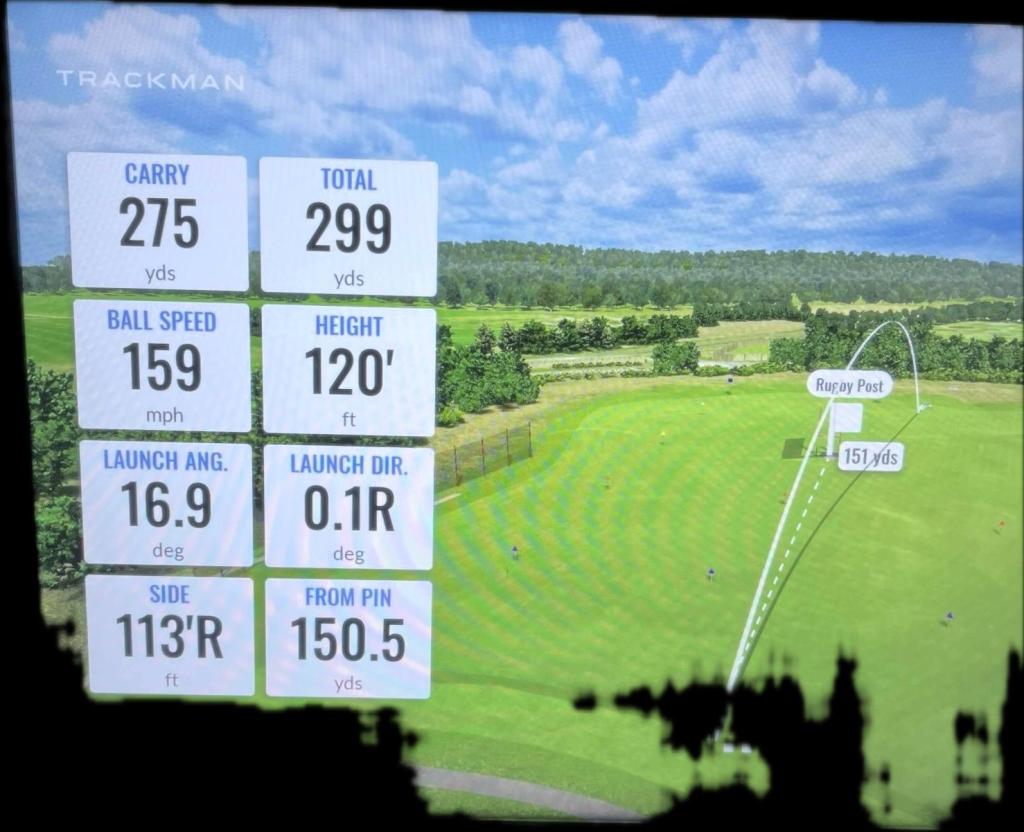
✅ Find your ball speed using a launch monitor at a golf range.
✅ Divide your ball speed by 1.5 (a standard efficiency factor).
✅ Example: If your ball speed is 135 mph, your estimated clubhead speed is 90 mph.
Knowing your clubhead speed will help you select the right golf ball for optimal performance.
Conclusion: Choose the Right Golf Ball to Improve Your Game
There are four main types of golf balls, each designed for different swing speeds, skill levels, and budgets. Choosing the right one can help you maximize distance, improve accuracy, and enhance feel around the greens.
🔹 Slow swing speeds (below 85mph): Soft two-piece balls for easy compression
🔹 Moderate swing speeds (86-99mph): Three-piece balls for balanced control
🔹 Fast swing speeds (100mph+): Four/five-piece “tour” balls for maximum performance
If you’re unsure about your clubhead speed, don’t forget the ball speed ÷ 1.5 trick to estimate it. The right golf ball could be the key to lower scores and better consistency!
 The Golfer's Arc
Leave a comment